

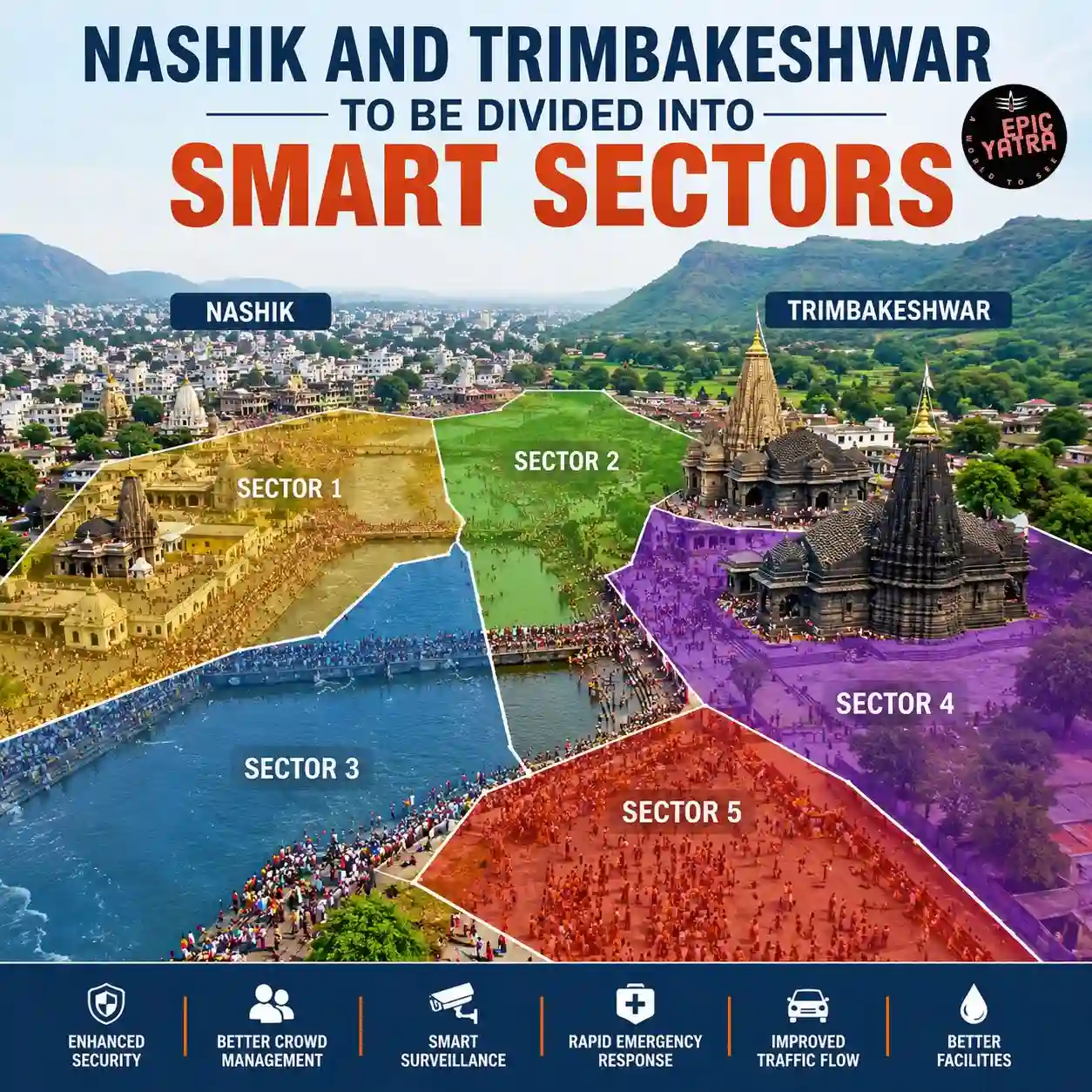
The Maharashtra government is taking a major step to make the Nashik Kumbh Mela 2027 safer and better organised by dividing Nashik city and Trimbakeshwar into Amrit Snan Smart Sectors. Moreover, all things considered, with millions of pilgrims expected to arrive during the sacred bathing days, authorities are adopting advanced planning methods to also improve crowd movement, traffic control, emergency response, and public services.
The Nashik Kumbh Mela is one of the world's largest religious gatherings, attracting devotees, saints, and tourists from across India and abroad. Moreover, managing such a massive crowd is a challenging task, especially during the Amrit Snan dates when attendance reaches its peak. Whether the smart sector approach aims to ensure that every pilgrim enjoys a safer, smoother, and more comfortable spiritual journey.
Amrit Snan smart sectors are specially planned administrative zones created to manage different parts of Nashik and Trimbakeshwar during the Kumbh Mela. Whenever instead of monitoring the entire event as one large area. Moreover, officials will divide it into multiple sectors, each with its own management team and dedicated facilities.
Every sector will include:
Further, this decentralised approach allows authorities to respond quickly to any situation without affecting the entire festival.
The number of pilgrims visiting the Nashik Kumbh Mela continues to grow every year. Furthermore, on the main Amrit Snan days, several million devotees gather near the Godavari River and Trimbakeshwar Temple within a short period.
Moreover, managing these crowds requires careful planning.
Dividing the pilgrimage area into smart sectors offers several advantages:
Moreover, instead of reacting to crowd situations, authorities can also now predict and manage them before they become serious.
Crowd management is one of the biggest challenges during any Kumbh Mela. Moreover, the Amrit Snan Smart Sectors system focuses on preventing overcrowding rather than responding after problems occur.
As a result, officials will continuously monitor crowd density throughout each sector. Furthermore, if one bathing ghat becomes crowded, pilgrims can be guided toward less congested routes or alternate ghats.
Benefits include:
In addition, these measures help create a safer environment while allowing devotees to complete their pilgrimage peacefully.
Technology will play a crucial role in making it successful.
Authorities are expected to use:
Furthermore, these tools will help officials detect crowd build-up early and coordinate different departments more efficiently.
Whenever, pilgrims can also receive route information, emergency alerts, and important announcements through digital platforms, making their journey more convenient.
Each smart sector will have its own security team responsible for maintaining order and assisting pilgrims.
Security arrangements may include:
Moreover, having dedicated emergency teams in every sector significantly reduces response time during medical emergencies or unexpected incidents.
Consequently, this localised approach ensures that assistance reaches devotees quickly without waiting for support from distant locations.
Traffic management becomes extremely difficult during the main bathing days due to the arrival of buses, private vehicles, and pedestrians from different parts of India.
Under the smart sector model, authorities are expected to introduce:
Firstly, these arrangements will reduce congestion inside the city while allowing emergency services to move freely whenever required.
Similarly, visitors are advised to follow official traffic advisories and use designated transport services whenever possible.
One major advantage of the Amrit Snan Smart Sectors system is that essential services will be distributed across all sectors instead of concentrating them in a few locations.
Pilgrims can expect facilities such as the following:
Furthermore, these facilities will improve comfort while reducing unnecessary movement between different areas.
As a result, Pilgrims planning to stay for multiple days should reserve their stay well in advance through reliable providers offering comfortable pilgrimage stays and guided travel arrangements, especially during the peak bathing dates.
The biggest benefit of Amrit Snan Smart Sectors is a safer pilgrimage experience.
Devotees will enjoy:
Moreover, families with children, older citizens, and first-time visitors will particularly benefit from the improved organisation.
In addition, the new planning model also helps saints, akharas, volunteers, and government agencies coordinate their activities more effectively.
Similarly, if you are planning to attend the Nashik Kumbh Mela 2027, following a few simple tips can also make your journey more comfortable.
Additionally, those planning a complete spiritual journey can also explore guided pilgrimage tours that combine accommodation, transportation, and local assistance for a smoother experience.
Similarly, devotees interested in future religious gatherings may also consider upcoming Ganga pilgrimage tours that include well-organised travel arrangements and comfortable stay options.
The introduction represents a major transformation in the management of large religious events in India.
Moreover, rather than relying solely on traditional crowd control methods, the government is combining technology, infrastructure, and decentralised administration to create a safer environment for millions of pilgrims.
Whether, if implemented successfully, this model could become a benchmark for future Kumbh Melas and other large public gatherings across the country.
In short, Forever devotees, it means a more organised, secure, and spiritually fulfilling pilgrimage experience without unnecessary inconvenience.
The decision to divide Nashik and Trimbakeshwar into Amrit Snan Smart Sectors marks a significant step toward modernising the management of Nashik Kumbh Mela 2027. Especially, all things considered, with improved crowd control, advanced technology, enhanced security, and better public facilities, pilgrims can also expect a safer and more comfortable experience during the sacred bathing days.
In addition, as millions of devotees prepare for this once-in-twelve-years spiritual gathering, early planning will make the journey much easier. Moreover, reserving your stay in advance, following official travel advisories, and choosing trusted travel services. Moreover, we will help you also focus on the spiritual significance of the event rather than logistical challenges.
Ans. Amrit Snan Smart Sectors are specially designated administrative zones in Nashik and Trimbakeshwar. In fact, they are designed to manage crowds, improve security, and provide better public services during the major Amrit Snan days of Nashik Kumbh Mela 2027.
Ans. Nashik and Trimbakeshwar are being divided into smart sectors to handle the large number of pilgrims more effectively. In fact, this system helps improve crowd control, traffic management, emergency response, and coordination between different government departments.
Ans. The smart sector system will use technologies such as AI-enabled CCTV cameras, drones, digital command centres, GPS-based traffic monitoring, LED information displays, and public announcement systems. Whether these tools will help authorities monitor crowds and respond quickly to any situation.
Ans. Yes, Pilgrims are expected to benefit from improved facilities, including medical centres, clean drinking water, sanitation services, help desks, information centres, security personnel, and also emergency response teams in every sector.
Ans. You should plan your Nashik Kumbh Mela trip as early as possible. Accommodation and transportation become limited during the Amrit Snan dates, so booking your stay and travel well in advance with Epic Yatra Travel Company can also help ensure a smoother and more comfortable pilgrimage experience.