


Heavy Snowfall Covers Kedarnath and Badrinath Dham: Current Weather Update and Travel Guide. Both Badrinath Dham and Kedarnath Dham in Uttarakhand are currently covered in heavy snowfall. Recent weather updates show that high-altitude areas in Chamoli district and Rudraprayag district are experiencing intense winter conditions.
Right now, snow levels have reached 3 to 4 feet, and the temperature has dropped to around –16°C. Because of this, the entire region looks like a white winter wonderland.
However, this snowfall is not unusual. Every winter, these holy temples remain covered with snow until the Char Dham Yatra season begins again. In this blog, we will explain the current snowfall situation, what it means for travellers, and how you can plan your Char Dham Yatra with Epic Yatra.
However, this natural beauty also brings challenges for travellers and pilgrims. Therefore, people planning a future visit should stay updated about weather conditions. In this blog, we will explain the current snowfall situation, travel impact, safety advice, and future pilgrimage plans in very simple words.
Recently, strong western disturbances brought heavy snowfall to the Himalayan region. As a result, Heavy Snowfall Covers Kedarnath and Badrinath Dham areas received continuous snowfall for several days.
Now, the snow depth has reached around 3 to 4 feet in many areas. Because of this, the temples, mountains, and surrounding forests are fully covered with snow. At the same time, temperatures have dropped dramatically. Reports say the temperature has fallen to -16°C in some high-altitude locations. This level of cold weather is normal during winter in the Himalayas. Still, it creates extreme conditions for anyone staying in the region.
Furthermore, the high mountains surrounding the temples are also receiving fresh snow. Because of this, the entire landscape looks magical and peaceful. Even though the temples remain closed during winter, this snowfall plays an important role. It helps maintain the natural balance of the Himalayan environment.
Because the Yatra season lasts only a few months, early booking is always better.
Many pilgrims start planning their trip months in advance.
When you book early, you can get:
Epic Yatra offers customized Char Dham Yatra packages, Do Dham packages, and helicopter packages for a smooth journey.
Earlier, reaching Kedarnath required a long trek of around 16 kilometers.
Today, helicopter services make the journey much easier.
Pilgrims can now travel using Kedarnath helicopter services from places like:
Helicopter travel is especially helpful for:
With helicopter packages, you can complete your Do Dham Yatra quickly and comfortably.
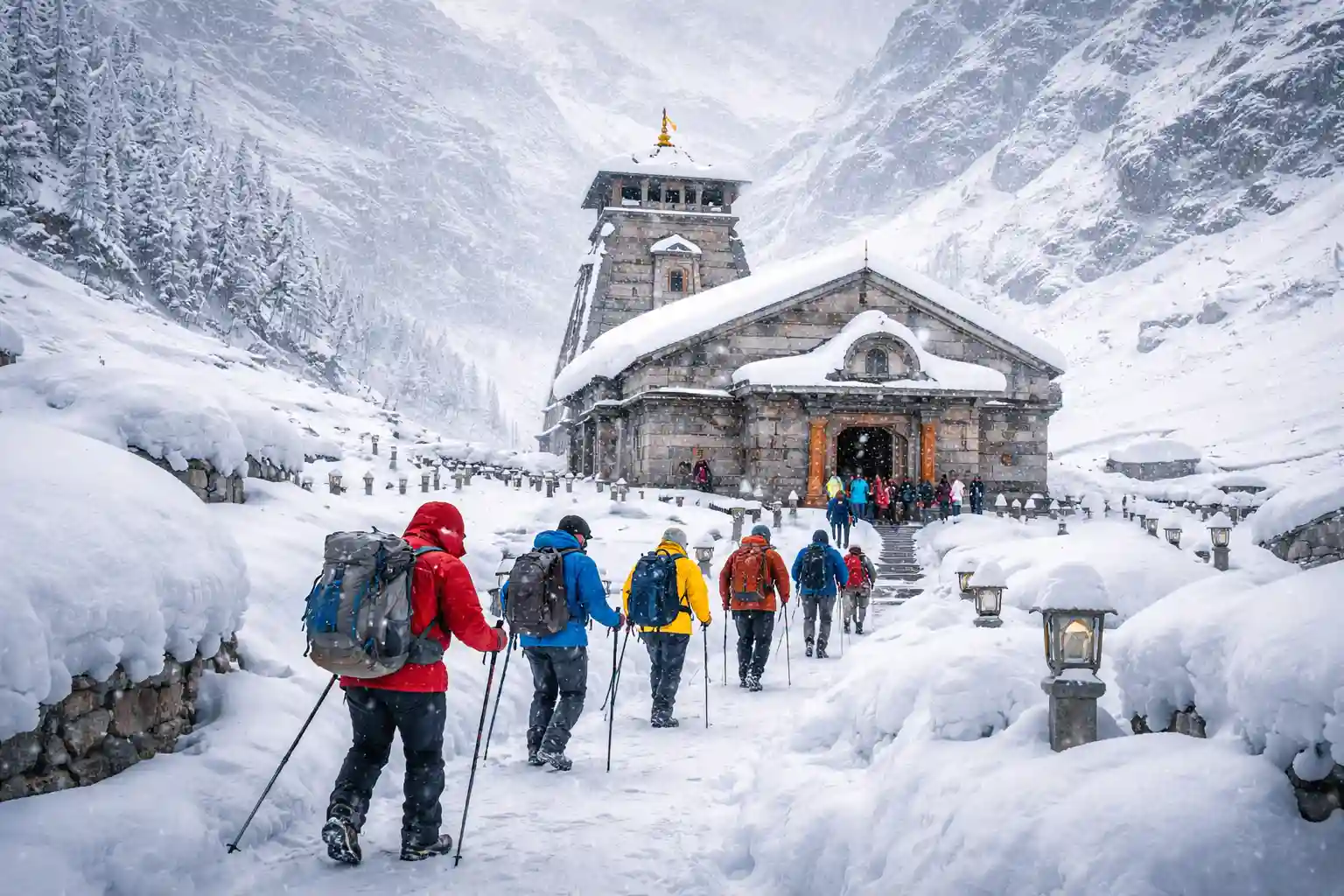
The temples of Kedarnath and Badrinath sit at very high altitudes in the Himalayas. Because of this location, they experience severe winters every year.
Kedarnath Temple stands at an altitude of around 3,583 meters above sea level. Meanwhile, Badrinath Temple is located at about 3,133 meters.
At these heights, winter temperatures fall far below zero. Snowfall becomes very common between November and March.
Several factors cause heavy snowfall here:
1. Western Disturbances
Cold weather systems from Central Asia move toward the Himalayas. When they reach Uttarakhand, they bring snow and rain.
2. High Altitude
Higher altitude areas always receive more snowfall. Kedarnath and Badrinath are among the highest pilgrimage sites in India.
3. Cold Himalayan Winds
Strong cold winds move across the mountains. These winds help create snowfall storms during winter months.
Because of these natural factors, heavy snowfall during winter is completely normal for the region.
Heavy snowfall changes the entire environment of these sacred places. While it creates beautiful scenery, it also creates many challenges.
Despite these challenges, snowfall also supports glaciers, rivers, and natural ecosystems in the Himalayas.
Every year, the temples close during winter due to extreme weather.
The doors of Kedarnath and Badrinath usually close in October or November. After that, heavy snow makes travel impossible.
During winter months, the idols of the deities are moved to other temples:
The idol of Lord Kedarnath is moved to Omkareshwar Temple in Ukhimath.
The idol of Lord Badrinath is worshipped in Joshimath.
Pilgrims continue prayers at these winter temples until the main shrines reopen.
Usually, the temples reopen in April or May, depending on weather conditions.
Many travellers also choose the Do Dham Yatra, which includes visiting only:
This journey is shorter but still very spiritual.
For people with limited time, the Do Dham Yatra package becomes the perfect option.
At Epic Yatra, we help pilgrims plan both Char Dham Yatra and Do Dham Yatra packages with comfort and safety.
Pilgrims eagerly wait every year for the opening of these sacred shrines.
Generally, the temples reopen during the Char Dham Yatra season, which starts in April or May.
Before reopening, authorities clear the heavy snow from roads and temple areas. Workers remove snow from trekking routes and important paths.
After that, priests perform traditional rituals before opening the temple gates.
Once the temples reopen, thousands of pilgrims begin visiting the holy sites.
Travel companies like Epic Yatra help pilgrims plan safe and comfortable journeys during the yatra season.
If you plan to visit Kedarnath or Badrinath in the future, safety should always come first.
Here are some simple tips: