

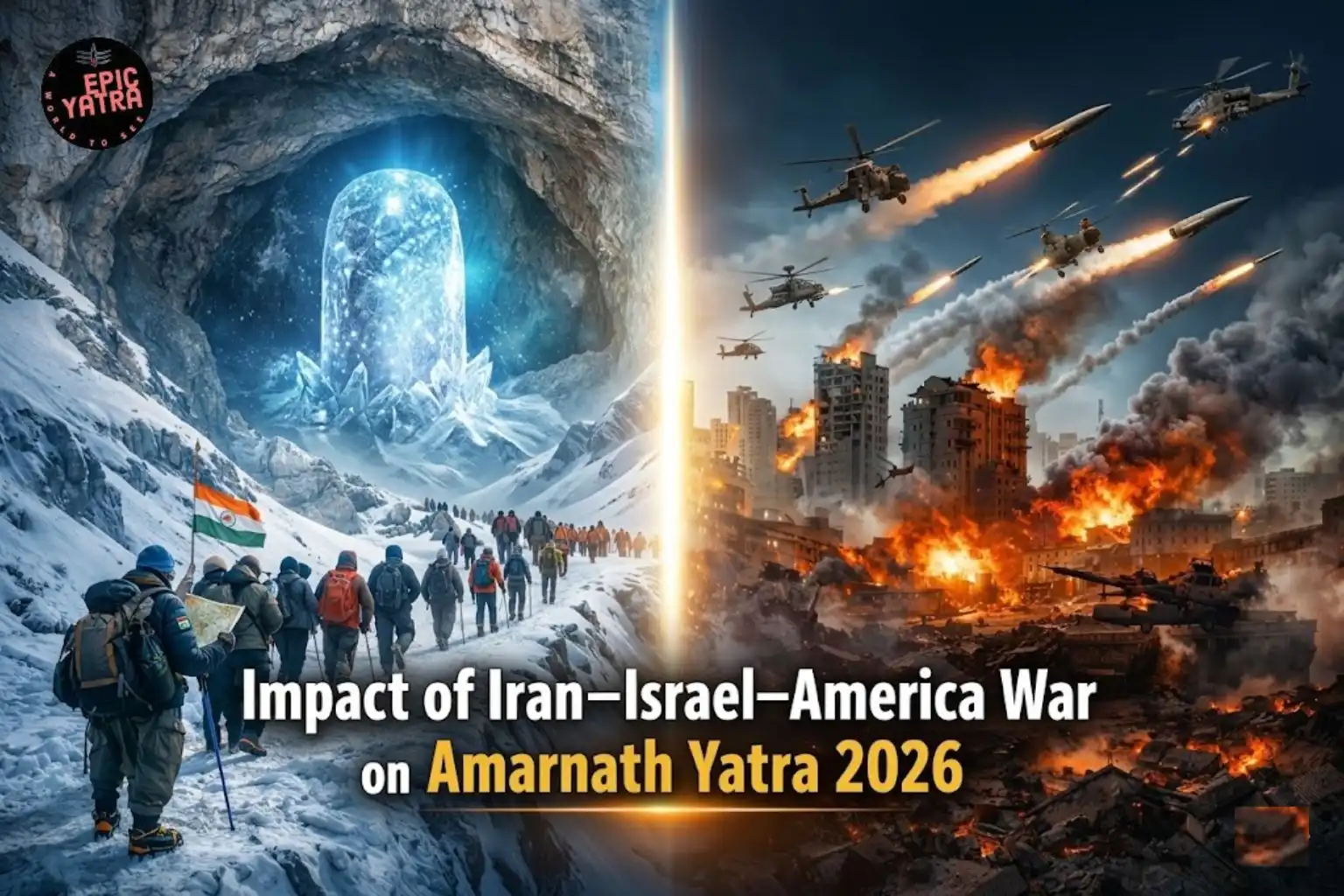
The rising tensions between Iran, Israel, and the America war have created global concern, especially impact for international travel and security Indian pilgrims is planning the Amarnath Yatra 2026. A common question arises — will this conflict affect the sacred journey?
The yatra takes place in Jammu & Kashmir, its far from the Middle East, global conflicts can still influence travel conditions, flight routes, security measures, and overall planning. Understanding these potential impacts is crucial before finalizing your pilgrimage.
The sacred journey to Amarnath Cave is not another pilgrimage—it’s an emotional, spiritual, and deeply personal experience with millions of Hindus. Every year, devotees handle this challenging trek to witness the naturally formed ice Shiva Lingam, believed to represent Lord Shiva himself. The yatra is seen as a path to freedom, devotion, and inner peace, where faith pushes a people beyond physical limitations.
Pilgrims is walk through the difficult landscape, changing weather, and high altitudes, yet their devotion keeps them moving forward. The significance of this yatra not lies just in reaching the destination, but in the journey itself—testing endurance, faith, and patience. For many, it’s a once-in-a-lifetime spiritual goal, making its continuity extremely important.
In recent years, the number of pilgrims visiting a Amarnath shrine has seen steady growth, often crossing 4–5 lakh registrations annually. Improved infrastructure, better security, and digital registration systems have made the yatra more accessible. However, this also means that any disruption—whether political, environmental, or global—can have a ripple effect on lakhs of people.
The yatra also plays a major role in boosting the economy of Jammu & Kashmir. Hotels, transport providers, local vendors, and pony operators all depend heavily on this annual influx. So, when global tensions rise, like a potential Iran–Israel–America conflict, the question naturally arises—how far can its impact reach?
The tensions between Iran, Israel, and United States are rooted in decades of geopolitical rivalry, nuclear concerns, and regional dominance. Iran’s nuclear ambitions have long been a point of concern for both Israel and the U.S., who fear potential threats to global security and balance of power in the Middle East.
Israel views Iran as a direct existential threat, while the United States has strategic alliances in the region that compel it to intervene or support military actions. These tensions occasionally escalate into direct or proxy conflicts, impacting not just the Middle East but global stability as a whole.
When such powerful nations are involved in conflict, the impact isn’t confined to battle zones. Oil prices surge, international trade routes become unstable, and global markets react instantly. For a country like India, which relies heavily on imported crude oil, even a minor escalation can affect fuel prices, inflation, and travel costs.
A part from the economic factors, global conflicts are create uncertainty worldwide. Governments is boost a security, issue new travel warnings and fear increases. Even religious events thousands of kilometers away, like the Amarnath Yatra, can feel the indirect effects.
Historical Examples
The History shows that religious tourism is highly sensitive to the global tensions. Example like- Travel to Mecca was disrupted during the Middle East conflicts and tourism in Europe is declined during major geopolitical crises. Even in India, events like the Kargil War and internal security threats have previously impacted to pilgrimage flows.
When people is hear about the war even if it’s far away their Natural instinct is to be cautious. Families is review a travel plans, especially when old members or children are involved. Pilgrimages, which require the physical and emotional commitment, often get postponed first.
Think about it—would you plan a physically demanding trip during a time of global uncertainty? Most people wouldn’t. Fear, even if not directly related, creates hesitation. Media coverage amplifies this, making distant conflicts feel closer than they are.
This psychological impact is one of the biggest challenges. It doesn’t matter if the Amarnath pahalgam route is safe; if people feel unsafe, participation drops. That’s the real invisible effect of global conflicts.
India is maintains a strong internal security System, especially in sensitive regions like Jammu & Kashmir. However, global conflicts is sometimes lead to increased awareness. Intelligence agencies is monitor any possible side effects, including a cyber threats or indirect influences.
During some times, the government often increases deployment of paramilitary forces, tightens entry points, and enhances surveillance. While this ensures safety, it can also create a perception of risk among travelers.
The Indian government always works to make the Amarnath travel from Srinagar is safe and smooth. Even during difficult times like pandemics or tensions, it takes steps to ensure safety and continue the yatra.
In 2026, if global tensions escalate, authorities are likely to:
These measures, while necessary, might slightly affect the ease of travel but will ultimately ensure safety.
The biggest impact is not always physical, but emotional. Devotees who plan their yatra months in advance may start to doubt their decision. Questions like “Is it safe?” or “Should we postpone ? become common.
Families, especially those traveling together, may cancel their plans due to fear. Even rumors or wrong information can create panic and reduce the number of registrations.
Travel agencies often see more cancellations during times of global tension. Even when flights and hotels are available, uncertainty can stop people from traveling. However, some strong believers feel the yatra is a divine call and are not affected by world events. This mix of fear and faith makes travel trends unpredictable.
One of the first effects of a Middle East conflict is the rise in oil prices. Higher fuel costs make flights more expensive, which affects pilgrims traveling from different parts of India. Air routes may also change due to restricted airspace, increasing travel time and cost. This can make the yatra less affordable for many people.
Increased costs don’t stop at flights. Hotels, taxis, and even basic services may become more expensive due to inflation. Pilgrims on a budget may find it harder to manage expenses.
Local businesses in Jammu & Kashmir rely heavily on the yatra season. A drop in pilgrim numbers means reduced income for hotels, restaurants, and tour operators.
Thousands of locals depend on seasonal work during the yatra—pony owners, porters, shopkeepers. A decline in visitors directly impacts their livelihood.
Security forces are the backbone of the yatra’s safety. During uncertain times, their presence increases, ensuring every route is monitored.
Modern technology like drones, CCTV, and satellite monitoring plays a key role in maintaining security.
Social media can sometimes exaggerate risks. A single viral post can create unnecessary fear, even if the situation is under control.
Continuous coverage of war-related news can make people anxious, influencing travel decisions.
Objectively speaking, the Amarnath Yatra is likely to remain safe due to strong security arrangements. The conflict, while serious, is geographically distant.
Recommended: Top 7 Safety Tips for Amarnath Pilgrims
Historically, the Amarnath Yatra has shown resilience. Temporary disruptions may occur, but long-term impact is unlikely.
Authorities may introduce:
Impact of Iran–Israel–America war conflict may affect the world, but its direct impact on Amarnath Yatra 2026 is likely to be small and book your package today with Epic Yatra. For proper guidance and the Most effects may be emotional rather than physical.
Strong government support, good security, and the strong faith of devotees help keep the yatra running smoothly. While there may be some travel or emotional challenges, the spirit of the yatra remains strong and unchanged.
No, cancellation is unlikely unless there are direct security threats within India.
Yes, if the destination is secure and government advisories permit travel.
Follow official government and Shri Amarnath Shrine Board updates.
Yes, fuel price hikes may increase overall travel expenses.
Only if official advisories suggest so; otherwise, proper planning ensures a safe journey.