

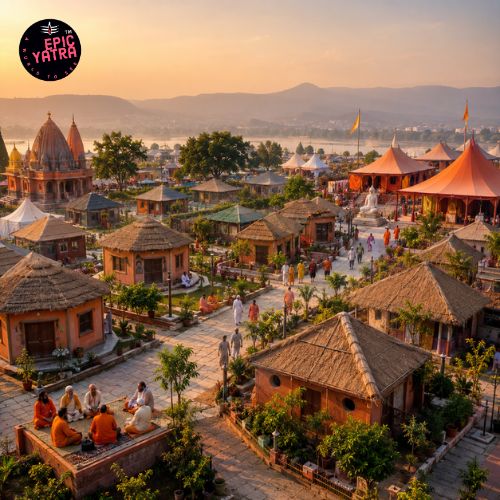
Every Kumbh Mela has one place that pilgrims talk about long after the festival ends. The Nashik Kumbh Permanent Sadhugram. It is the dedicated township built for sadhus, Naga ascetics, Akhada leaders, and Mahamandaleshwars during the Mela. Think of it as the spiritual command centre of the entire event. This is where the Akharas set up their camps, where religious discourses happen daily, and where visitors get a rare, close-up look at India's monastic traditions.
Authorities have traditionally built Sadhugram from scratch before every 12-year Nashik-Trimbakeshwar Simhastha and dismantled it after the Mela ends. That's about to change.
Ahead of the 2027 Simhastha, the Maharashtra government has decided to move away from short-term arrangements. Officials have already begun planning permanent infrastructure that will benefit Nashik long after the Mela ends. If you're visiting, plan your Nashik pilgrimage early for a hassle-free experience.
This shift matters for a few reasons:
Officials have also flagged an important, practical concern: since the 2027 Kumbh overlaps with the monsoon, the site needs a solid flood and drainage plan. During a recent inspection, officials noticed rainwater accumulation near the proposed site and are now studying an alternate location before making a final decision.
The proposed Nashik Kumbh Permanent Sadhugram is planned near the Ahilya Kund area, close to Trimbakeshwar. Tapovan will also continue to play an important role as a traditional Sadhugram zone. The administration has reserved a vast area for the project to accommodate saints and pilgrims. Once the authorities complete it, they expect it to become one of the largest dedicated saint settlements for any Kumbh Mela outside Prayagraj.
The 2027 Simhastha will span an unusually long 21-month period, beginning with the flag-hoisting ceremony in October 2026 and continuing until mid-2028. This extended duration is expected to bring a steady flow of pilgrims over many months. As a result, the government is prioritising a location that can handle sustained footfall instead of serving only the peak weeks.
A permanent Sadhugram isn't just about pitching sturdier tents. Based on the government's current planning, here's what pilgrims and visitors can expect:
The Maharashtra government is driving the overall infrastructure push for the 2027 Simhastha by allocating thousands of crores for the development of the Nashik Kumbh Permanent Sadhugram, along with ghat construction, road upgrades, and civic amenities across the surrounding pilgrim zones.
If you've attended a Kumbh Mela before, you know that crowd management and comfort near the saints' camps can make or break the experience. A permanent Sadhugram is designed to fix several recurring pain points:
For families and first-time visitors, this also means it will be easier to plan a short, focused visit to Sadhugram itself, rather than treating it as an unpredictable side trip.
It helps to understand how Sadhugram differs from the general accommodation zones set up around the city:
Most travellers visit Sadhugram for a few hours to witness the Akhada camps and rituals, then base themselves in one of the broader accommodation zones for the rest of their trip. Areas like Panchavati keep you close to the main temples, Tapovan suits those who prefer a quieter, ashram-style stay, and the city centre works well if you want a mix of comfort and easy transport access. Explore Nashik pilgrimage stay options to find the best place for your visit.
Sadhugram usually stays open to visitors for the entire duration of the Mela, but a few windows are especially worth planning around:
Outside these specific days, the atmosphere is calmer, which some travellers actually prefer if they want unhurried conversations with sadhus or a quieter look at monastic life.
Given the scale of the 2027 Simhastha and the limited land available around Nashik compared to Prayagraj, pilgrims are expected to book their accommodation near Sadhugram and the ghats early. A few practical pointers:
Working with a travel partner who understands the local layout, seasonal weather, and Akhada schedule can save a lot of guesswork, especially if this is your first Simhastha.
If your pilgrimage extends beyond Nashik, consider visiting Haridwar during its Kumbh Mela, held on the banks of the Ganga. Like Nashik, Haridwar also sets up a dedicated area for saints near Har Ki Pauri, though it is smaller due to geographical constraints. To enjoy a smoother experience, book your accommodation close to the main ghats well in advance. Staying flexible with your travel plans is especially helpful during the busiest bathing days.
Many pilgrims who complete the Nashik leg of their spiritual journey often plan a Haridwar visit in a future cycle, so it helps to keep a checklist of what worked (and what didn't) for future reference.
The move toward the Nashik Kumbh Permanent Sadhugram marks a major step in improving the Kumbh experience. If you're planning to visit, book your spiritual journey in advance for a smoother pilgrimage. The permanent infrastructure will benefit both pilgrims and Nashik residents for years to come.
If you're planning to witness this historic shift firsthand, start your planning early and choose your base thoughtfully. Also, keep an eye on official updates as the 2027 dates draw closer.
Yes, visitors can generally enter and explore the Sadhugram throughout the Mela period, though the busiest and most vibrant days align with the main bathing dates.
That's part of the government's intent — building lasting infrastructure so future religious gatherings and even regular tourism can make use of the site.
The authorities have located it near Ahilya Kund on the Trimbakeshwar side and are developing better connectivity to both Ramkund and Kushavarta Kund.
Given the long 21-month duration of the event and limited land around Nashik, it's best to lock in your dates and stay several months ahead of your planned bathing days.Epic Yatra makes every journey truly unforgettable.