

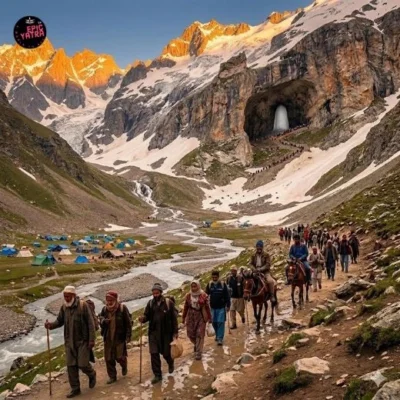
The sacred route from Panchtarni to the holy shrine this is one of the most emotional and spiritual parts of the journey to Amarnath Cave. Since ancient times, pilgrims are followed this path with the deep faith while a chanting the name of Lord Shiva. The Panchtarni to Amarnath Cave History is reflects both ancient mythology and the spiritual related traditions with the sacred Amarnath Yatra.
The located in beautiful Himalayan Area of Jammu and Kashmir, this final stage of the pilgrimage represents is faith, strength, and inner peace. After crossing the difficult mountain path and high-altitude landscapes, pilgrims are finally walk to the last few kilometers from Panchtarni to reach the holy cave where the naturally formed ice Shivling appears every year.
For the many devotees, this route is not a trek but powerful spiritual experience that brings them closer to Lord Shiva.
Panchtarni is the most important stop during the Amarnath trek. The name “Panch-tarni” is comes from two Sanskrit words: (Panch) meaning is five and (Tarni) meaning is streams. According to the ancient Hindu beliefs, five sacred rivers and streams flow in this area, representing the five elements of nature is – earth, water, fire, air, and space.
These five elements are commonly known as Panchtatva, which are believed to considered the base of the universe. According to the mythology, Lord Shiva is released these five elements at five streams before entering the cave to reveal the own secret of immortality to Goddess Parvati.
Because of this belief, Panch-tarni holds the immense spiritual importance for pilgrims. At present the site is serves as a major halt for the pilgrims during sacred journey.
The distance between the Panchtarni and sacred cave is approximately 6 kilometers. Although the distance is may appear short, the trek is takes time around 3 to 4 hours to complete because the steep mountain paths and high altitude.
Trek Details
Starting Point: Panchtarni Base Camp
Destination: Amarnath Holy Cave
Distance: Around 6 km
Trek Duration: 3–4 hours
Altitude: Approximately 3,888 meters (12,756 feet)
Final part is the mostly seen as most emotional part of the journey. As a pilgrims is the move closer to cave and the sound of devotional chants is fills the mountain air, creating a deeply spiritual atmosphere.
A part from the religious importance and the trek from Panchtarni to cave is offers the amazing natural views. The Pilgrims walk through the Amazing Himalayan landscapes that make the journey is memorable and the serene beauty is suggestive of the spiritual environment found at places like Raghunath Temple in Jammu.
Some of the beautiful sights along the route include:
The Stunning environment is make the final area of the Amarnath trek both are the Heart-touching and breathtaking.
Many pilgrims describe this part of the trek as the moment when faith and nature come together.
Story of the Amarnath pilgrimage is strongly linked to Hindu legends. According to the legend, Lord Shiva is choose the divine in the Himalayas to reveal the secret of immortality to goddess parwati.
Lord Shiva placed the companions and symbols on the path to keep this divine secret hidden.
The important mythological stops include:
After leaving All shakti behind the Lord Shiva entered in sacred Amarnath Cave to share the secret of eternal life.
This legendary Story Maa Sati and Shiva is why each stop along the route has a unique religious significance.
Panch-tarni is plays the important role in overall pilgrimage and this is the last major base camp before the final stag to the holy cave.
Pilgrims is mostly rest here before start the final trek early in the morning. The location is also offers the medical camps, food facilities and tent accommodations during the yatra season.
For Many devotees, Panch-tarni is represents the final stage of preparation before the reaching sacred shrine. The spiritual excitement is among pilgrims the becomes a stronger as they realize that the holy cave is only a few kilometers away.
The holy shrine remains the accessible only during the official Amarnath season. The pilgrimage is usually takes the place between June and August its depending on weather conditions.
During this time the snow is begins to melt and the trekking routes is become a safer for pilgrims. Thousands of devotees are from across India travel to the cave witness the naturally formed ice Shivling.
Although, weather in the Himalayan region can change quickly. Pilgrims is should always the check official announcements and prepare properly before starting the journey.
High-altitude trekking is with the change conditions demands and careful preparation. Here are the some helpful tips for pilgrims traveling from five streams to cave:
1. Carry warm clothes and waterproof jackets.
2. Wear the comfortable trekking shoes.
3. Stay hydrated during the trek.
4. Walk slowly to avoid altitude sickness.
5. Follow safety guidelines the issued by official authorities.
Many devotees is choose the booking organized tours through the experienced travel companies such as Epic Yatra to make the journey safer and more convenient.
Journey is from the Panchtarni to Amarnath Cave is represents final holy stage of the Amarnath Yatra Short powerful trek is hold the long time of history, mythology, and spiritual devotion.
Pilgrims is reaching the holy cave after walking through the amazing Himalayan landscapes is moment of a deep faith and fulfillment. Book today with Epic Yatra the divine stories is related with the route is along with natural beauty of the region and make this journey is truly memorable.
The distance is the Panchtarni to Amarnath Cave is approximately 6 kilometers and the trek is mostly takes 3 to 4 hours.
Pilgrims believe Panchtarni represents the five elements of nature (Panchtatva) and use it as the last major base camp before reaching the sacred cave.
Yes, helicopter services is available up to Panchtarni during the Amarnath Yatra, but pilgrims is must complete the final 6 km trek by foot.
The trek is moderately challenging due to the high altitude and steep terrain, but most pilgrims can complete it with proper preparation.
The pilgrimage usually takes place between June and August, depending on weather conditions and official announcements.