

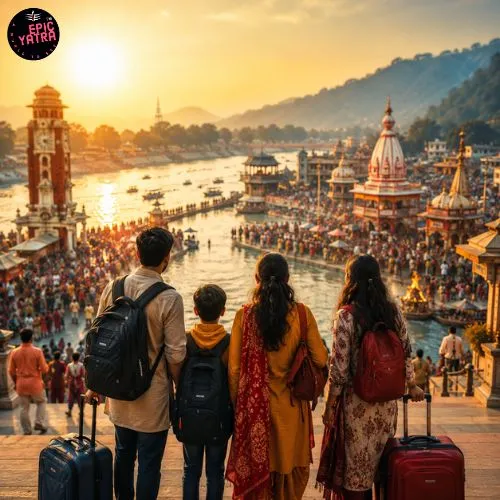
Haridwar, one of the seven holiest cities in India, transforms into a sea of devotion during the sacred gathering. A well-planned Haridwar Kumbh travel plan helps you enjoy a smooth pilgrimage with a comfortable stay, convenient transfers, and a hassle-free spiritual experience from arrival to departure.
This guide walks you through everything you need to know before you travel: why this gathering matters, what a tour arrangement typically covers, the best places to explore, how to reach the city, and practical tips to keep in mind.
There are few experiences in the world that match the scale and spiritual intensity of this gathering. Millions of devotees, saints, and seekers converge on the ghats of Haridwar, turning the city into a living festival of faith. Planning your journey with a complete Haridwar pilgrimage tour ensures a comfortable and well-organised spiritual experience.
Taking a dip in the Ganges during this auspicious period is believed to cleanse sins and bring spiritual liberation. The river, considered sacred throughout Hindu tradition, is thought to carry even greater purifying power during this window, drawing crowds who wait patiently for their turn at the ghats.
Beyond the holy dip, the city comes alive with rituals such as the evening Ganga Aarti, processions of sadhus, havans, and religious discourses. Watching these ceremonies unfold along the riverbank is an experience that stays with visitors long after they leave.
For many, this isn't just a trip — it's a bucket-list pilgrimage. The combination of scale, devotion, and centuries-old tradition makes it something people plan for years in advance and remember for a lifetime.
A well-planned trip takes the stress out of navigating crowds, finding a place to stay, and arranging local transport on your own. Most organised trips typically cover the following:
Pre-booked rooms close to the main ghats or in peaceful surrounding areas, so you're not scrambling to find a bed during peak crowd days.
Breakfast, and often other meals, are arranged as part of the itinerary, along with vehicles for airport/station pickup, drop, and local movement.
Guided visits to major temples and viewpoints around the city, so you don't miss the key spiritual and cultural spots.
A local coordinator or guide who can help with directions, timings, crowd management advice, and any last-minute issues that come up during such a high-footfall event.
While the main event is the highlight, Haridwar has several other sites worth including in your itinerary.
The most iconic ghat in the city, Har Ki Pauri, is where the evening Ganga Aarti takes place and where most pilgrims take their holy dip. The chanting, floating diyas, and ringing bells create an unmatched spiritual atmosphere.
Perched on a hilltop, Mansa Devi Temple is reachable by a cable car ride that offers panoramic views of the city and the river below. The temple is dedicated to the goddess believed to fulfil the wishes of devotees.
Located across the river on Neel Parvat, Chandi Devi Temple is another popular stop, accessible either by a trek or a ropeway. It is known for its peaceful surroundings and scenic views.
Daksh Mahadev Temple is a quieter yet historically significant shrine dedicated to Lord Shiva, closely associated with ancient mythological stories. It is an excellent choice for pilgrims seeking a peaceful and less crowded spiritual experience.
Given the scale of the crowds expected, planning your route in advance is essential.
The nearest airport is Jolly Grant Airport in Dehradun, roughly 35-40 km away, well connected to major Indian cities. From there, taxis and shared cabs are readily available to Haridwar.
Haridwar has its own railway station with direct connections to Delhi, Mumbai, Kolkata, and several other major cities, making rail travel one of the most convenient options during high-traffic periods.
Well-maintained highways connect Haridwar to Delhi (around 200 km) and other nearby cities. Buses, private cabs, and self-drive options are all viable, though expect longer travel times due to increased traffic during the event.
Timing your booking correctly can make a significant difference to your overall experience and budget.
Rooms near the main ghats fill up quickly, and prices tend to rise sharply as the event approaches. Booking early gives you:
A smart Haridwar Kumbh travel plan includes avoiding peak bathing days if you prefer smaller crowds. Consider visiting a day before or after the main bathing dates while still experiencing the spiritual atmosphere.
A little preparation goes a long way when you're navigating large crowds and outdoor rituals.
Stay hydrated, avoid street food if you have a sensitive stomach, keep emergency contact numbers handy, and stick with your group in crowded areas. If you're travelling with old family members or children, plan extra time and rest breaks.
Modest clothing is expected at temples and ghats. Covering shoulders and knees is a good general rule, and removing footwear before entering temple premises is customary.
Follow instructions from local authorities and volunteers regarding designated bathing areas, timings, and crowd flow. Avoid carrying valuables into the water and stay aware of your surroundings at all times.
Where you stay can shape your entire experience, especially during a high-crowd event.
Staying within walking distance of Har Ki Pauri means less travel time and easier access to evening ceremonies, though these rooms are the first to sell out.
For travellers wanting extra comfort, premium hotels and resorts offer spacious rooms, better amenities, and a quieter environment away from the busiest lanes.
Simple, clean, and affordable options are available for pilgrims who prioritise function over frills, often located a short auto-rickshaw ride from the ghats.
Larger rooms, dormitory-style stays, or multiple connecting rooms work well for families and groups travelling together. Explore the best stay options for pilgrims to enjoy greater comfort, as many properties also offer group discounts during this season.
Organising everything independently during a mass gathering can be overwhelming. Here's why letting professionals handle the logistics often makes more sense:
No need to spend hours comparing hotels, checking train availability, or figuring out local transport routes.
We arrange vehicles in advance, so you don't have to negotiate fares or wait for transport during peak crowd hours.
Established operators often have rooms blocked in advance, giving you access to stays that may otherwise be sold out.
Having someone familiar with the city and event logistics on hand can be invaluable if plans need to change suddenly or issues arise.
A well-planned Haridwar Kumbh travel plan lets you focus on faith instead of logistics. Experience the sound of temple bells, the glow of diyas on the Ganga, and the devotion of millions while enjoying a smooth journey with organised stay, travel, and daily arrangements.
Book early, pack smart, and give yourself enough time to truly experience everything this holy city has to offer. Experience unforgettable spiritual journeys with Epic Yatra.
A. Most arrangements include hotel accommodation, meals, local transportation, sightseeing of major temples and ghats, and on-ground assistance throughout your stay.
A. A trip of 3 to 4 days is generally ideal — enough time to attend the main rituals, visit nearby temples, and avoid rushing through the experience.
A. It's best to book at least a few months in advance, especially for stays near the main ghats, since availability drops quickly as the event approaches.
A. Hotels within walking distance of Har Ki Pauri are most preferred for convenience, though they book up fast, so early reservation is important.
A. Yes, most organised trips include pickup, drop-off, and local transport as part of the itinerary, reducing the hassle of arranging vehicles independently during the crowded event days.