

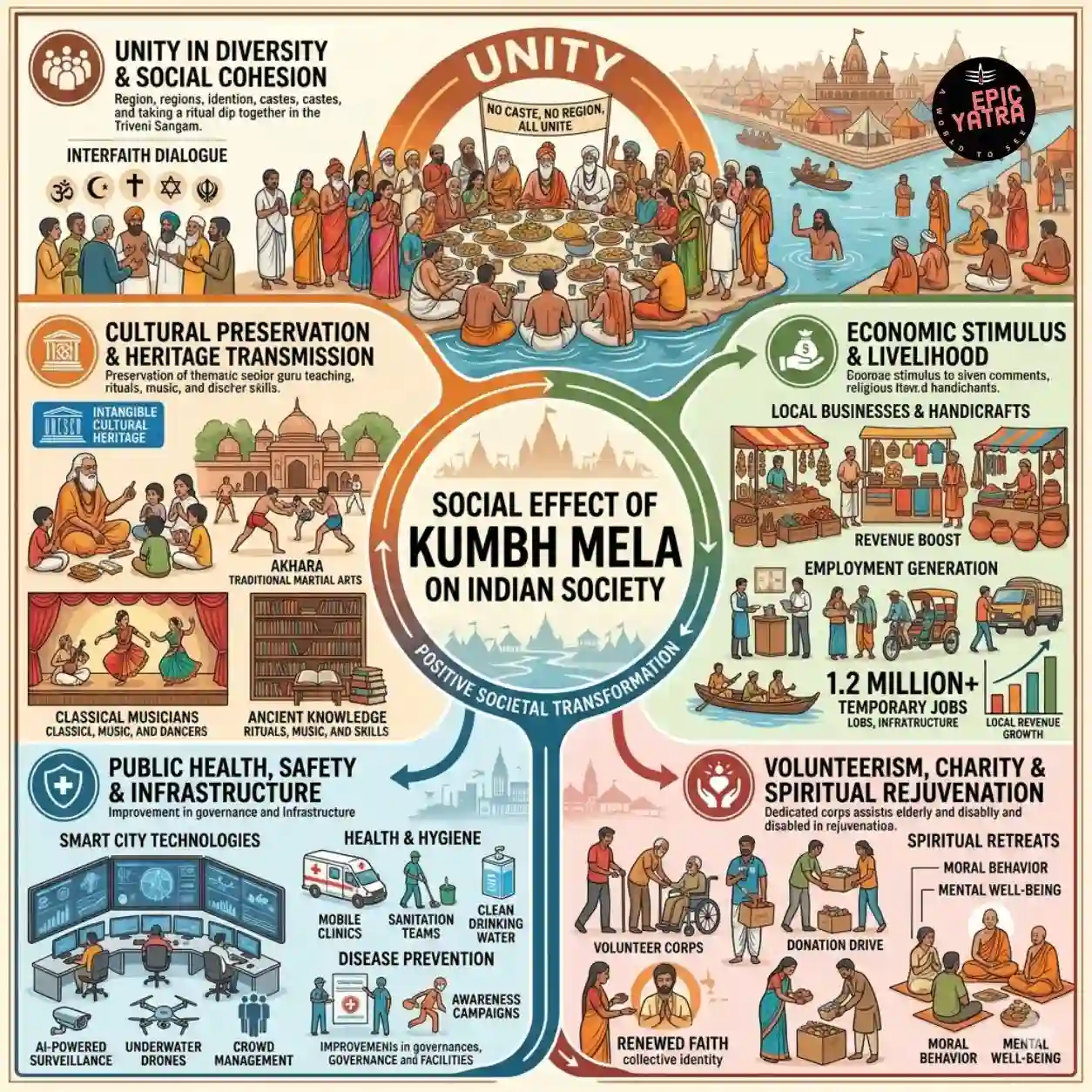
This is one of the biggest spiritual groups in india drawing millions of pilgrims from all over the world. The festival celebrated on the holy river banks of Prayagraj, Haridwar, Nashik and Ujjan is a symbol of faith, devotion and cultural unity. The Social impact of Kumbh Mela can be seen in the entire length and breadth of the Indian society from spiritual awareness to economic growth.
This holy festival connects people of various religions, languages and social backgrounds. Many pilgrims also choose their travel by organized spiritual travel services that provide guided stays, riverside camps and comfortable spiritual travel plans for a smooth experience.
Kumbh is complete with Hindu mythology. According to the ancient beliefs, during the Samudra Manthan, the nectar fell at four sacred places and these places became the host cities of the Kumbh festival. Saints, expert and devotees have been visiting these holy places for centuries to take part in the rituals and spiritual discussions.
The event saves the ancient culture of India and shows religious values from generation to generation. It also highlights the traditional power of Indian culture and spiritual practices that are still relevant in modern times.
One of the strongest social effects on society is the Kumbh Mela’s ability to unite people. At the festival, social differences tend to be less significant as everybody unites with the same spiritual purpose.
Pilgrims from villages, towns and cities, eat, pray and share experiences together. Many visitors take organised pilgrimage tour packages to help them stay in touch and comfortable through the busy festival period and families tend to travel together. Such experiences are creating emotional connect and strengthening community ties across India.
Kumbh Mela is not only a religious crowd but also a great traditional festival. Visitors can savour folk music, discourses on spirituality, devotional songs, Yoga and traditional performances from various states.
The festival offers an opportunity for people to learn about the values and traditions of the area. This supports more cultural understanding and respect between communities. Local artisans and craftsmen give handmade goods, they contributing to the preservation of India's traditional art forms.
Many tourists choose special spiritual travel packages with riverside lodging and guided camp experiences to fully enjoy the cultural atmosphere of the festival.
It is a very important place for saints and spiritual heads. They teach their followers religious teachings, meditation and spiritual discussion. Their messages are frequently about peace, humanity, discipline and social harmony.
Moreover, many people who have positive values in their daily lives become role models for respected experts. In addition, the festival brings together large spiritual gatherings, helping people connect more deeply with their beliefs and, as a result, increasing awareness and positive knowledge.
The Mela has brought about many economic opportunities for the local societies. Hotels, transport operators, restaurants, shopkeepers and street vendors have all seen a boom in business during the festival season.
Temporary jobs also increase as large numbers of workers are required for security, sanitation, transport, event management and hospitality services. Many families find festivals an important source of additional income.
Pilgrims prefer pre-booked accommodation, riverside camps, spiritual tour services to boost local tourism businesses and accommodation providers.
The Kumbh Mela experiences a major rise in religious tourism. Both Indian and foreign tourists experience grand spiritual environment. Governments will upgrade roads, railway stations, airports and public services before the festival begins.
More hotel, camping, tent, transport and food service bookings are a boon for the tourism sector. Today many travellers seek complete pilgrimage arrangements with guided visits, timings for sacred bathing and comfortable lodging facilities.
Spiritual tourism has also picked up in places like Haridwar and Nashik, improving setup for future travelers.
Kumbh creates unity and social peace among people of different backgrounds. Moreover, the festival inspires the importance of equality, kindness, and peaceful unity.
In addition, leaving caste, language, and money aside, millions of devotees gather on the same riverbanks. The spiritual rites and common prayers give a strong feeling of unity and national integration.
Furthermore, this participation of all together represents the true spirit of Indian culture which strengthens relationships among communities throughout the country.
Women are participating in the Kumbh through holy rituals, spiritual talks, social services and cultural activities. Many of the festival’s followers also come to see female saints and spiritual leaders.
Women travelers have become increasingly visible in the field of pilgrimage tourism in recent years. Most families prefer to stay in safe accommodation facilities and organized spiritual camps which make it more comfortable and safe for female pilgrims.
This increase in participation is a positive Social Impact Kumbh Mela on Indian Society and Culture change, even more integration of religious events.
Kumbh brings many benefits along with challenges for local people. Millions of visitors in a small space can put a strain on roads, water supply, sanitation and waste management systems.
Peak bathing days can be busy and crowded. Authorities have to put in a lot of effort to keep the festival safe and clean for the public.
But better planning and more structured visitor services have helped reduce some of the management problems over the last few years.
Environmental consciousness is a major component of the contemporary. Government agencies and volunteers are urging pilgrims to keep the areas around rivers and public places clean.
Campaigns for plastic-free zones, clean bathing zones and proper waste disposal are eco-friendly and help save the environment. Health awareness programmes and medical camps are also organised for the benefit of the pilgrims during the event.
Many organised pilgrimage stays are now introducing eco-friendly tents, better sanitation systems and responsible tourism practices to reduce their environmental impact.
Technology has changed the way Kumbh Mela is managed in recent years. Authorities use CCTV cameras, AI systems, drones, GPS tracking and mobile applications to manage crowds and improve security.
Digital maps and online booking ease the pilgrim’s journey. A good number of visitors these days book beforehand their spiritual tour plans and accommodation facilities camp stays on the Internet before coming to the festival.
Smart management systems also enhance the emergency response services, communication networks and transportation facilities during the event.
Kumbh Mela helps youth rediscover Indian culture, spirituality Many young people volunteer, take photographs, make content and play pilgrims at the festival.
The event instills values of discipline, service, unity and culture pride. Young travellers also get to explore traditional Indian customs but at the same time experience modern event management systems.
With the growing popularity of digital platforms and social media, youth’s interest in spiritual tourism and cultural festivals across India has grown further.
Kumbh Mela is the largest peaceful gathering in the world and, moreover, it has been appreciated throughout the globe. In addition, the festival attracts visitors, researchers, photographers, and journalists from many countries to India to experience its spiritual traditions.
The event is a global platform to showcase Indian culture, yoga, meditation, devotional music and religious varieties. Foreign tourists mostly choose all-inclusive holiday packages with guided accommodation and cultural activities in order to better experience the festival. It also creates a strong social impact kumbh mela by promoting unity, cultural exchange, and communal harmony, while supporting local livelihoods, small businesses, and traditional crafts in host cities.
The world’s attention on India further adds to India’s image as a land of spirituality and cultural values.
The social impact Kumbh Mela Creates is much more than mere religion. It promotes cultural connection, supports local economies, boosts tourism and encourages social unity between communities.
From spiritual teachings to modern management systems, the festival still continues, but still has its ancient traditions. It brings people together, supports local livelihoods and preserves the cultural identity of India for generations to come.”
As more yatris and tourist groups arrive for upcoming festivals, travel plans, comfortable hotels, riverside camps, and spiritual tourism services will continue to grow in places like Haridwar and Nashik. For better planning and convenience, many devotees now prefer a Nashik pilgrimage travel package that ensures a smooth and well-organized experience.
It is a festival that unites people from various communities from across India to promote unity, also cultural exchange and spiritual consciousness.
The festival is a boost for tourism, jobs and local businesses such as hotels, transport, food stalls and markets.
People attend Kumbh Mela to spiritually cleanse themselves, perform religious rites, get an exposure to the culture and take a dip in the holy rivers.
Improves crowd management, security, transport, communication and online booking services to pilgrims.
Large crowds problems for local authorities and communities in terms of traffic, sanitation, waste management and environment.
The festival connects young people to Indian culture, spirituality, social values and volunteerism.
Experience Holy Travel with Epic Yatra