

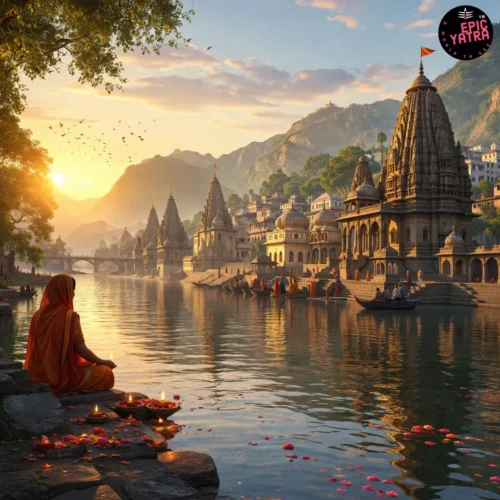
Nashik is a very holy city in India. During the Kumbh, it feels full of devotion and spiritual energy. Moreover, temples near Nashik Kumbh and many nearby sacred places make the journey more special beyond the main rituals. Additionally, visiting these peaceful spots helps you feel calm, happy, and more connected to your spiritual path.
Here’s a simple list of the key temples and holy places you can visit during your Nashik Kumbh pilgrimage.
The spiritual heart of Nashik is Panchavati. The name literally translates to “five banyan trees", and it is said that Lord Rama spent time here when he was exiled. Panchavati is more than temples—it’s a holy area containing ghats, sacred spots and peaceful riverside views. Devotees visit this site to pray, meditate and take a holy dip in the Godavari River. The environment is tranquil, which makes it an excellent start for your spiritual exploration in Nashik.
Kalaram Temple is a popular sight in Nashik and one of the must-visit spots when exploring temples near Nashik Kumbh. The temple is dedicated to Lord Rama, and any visitor is bound to be impressed by the black stone idol of Rama found here. Therefore, Kalaram refers to Rama, who is black in colour. The architecture has an incredible structural design, with intricately carved pillars and a beautiful inner sanctum.
The temple is not just a place of worship but an entire landscape that speaks of the rich religious heritage of Nashik.
The Sita Gufa, a cave temple where it is believed Lord Rama’s wife Sita spent time in exile, is next on this list. The cave is said to have a mystical energy of its own, and visitors feel that they are relaxed and spiritually uplifted after being here. It may be small, quiet but very important place for pilgrims.
Kapaleshwar Temple – A Lord Shiva temple famous for its silent aura and very detailed carvings. In contrast to the more crowded temples of Nashik, Kapaleshwar provides a peaceful place to meditate and enjoy the divine presence. Many pilgrims like to integrate their visit here with a walk along the nearby ghats.
Ramkund is one of the most significant bathing ghats in Nashik. Getting dipped into this sacred pool is thought to wash away sins and grant spiritual blessings. During Kumbh this ghat comes to life, as devotees perform rituals and prayers. Ramkund provides one a taste of the sacred energy that flows through Nashik.
Another important ghat is Kushavarta Kund, where pilgrims bathe during the holy dip. This kund is particularly tranquil in the early morning, with sunlight twinkling on still waters. It’s an ideal location for meditation and spiritual purification before seeing the bigger temples and other sacred sites.
The Pandavleni Caves are a group of ancient rock-cut caves located on a hill overlooking the city of Nashik. These are ancient caves dating back to the 1st century BCE that were used for meditation by the Buddhist monks. Strolling through the caves, you will glimpse carvings and stupas that illustrate India’s ancient spiritual crafts. The trek to the caves also has a great view of Nashik city.
Close by are the Chambarleni Caves, less known but equally fascinating. The caves are a serene escape, with tiny shrines and meditation areas. Visitors—whether pilgrims seeking an escape from the crowd or tourists looking to connect with the area’s spiritual history—often come here.
One of the famous temples near Nashik is Trimbakeshwar Temple, dedicated to Lord Shiva. One of the twelve Jyotirlingas is located here; hence, this temple holds a special significance. The architecture is classical, featuring the stone carvings, massive columns and sacred inner sanctum. Kumbh: The spiritual experience Visiting Trimbakeshwar during Kumbh is a spiritual experience you won’t forget.
The Brahmagiri Hills: a natural wonder and a spiritual hotspot As per the last, the place derives its name because Lord Brahma performed a yagya here. One can trek these hills for adventure as well as spiritual satisfaction. Indeed, many pilgrims prefer to meditate or do small rituals in the peaceful hills.
Firstly, Anjaneri is believed to be the birthplace of Lord Hanuman. Moreover, this small hilly region is surrounded by lush greenery. In addition, it offers trekking paths, ancient temples, and beautiful views. As a result, its natural beauty and spiritual significance attract both pilgrims and travellers. Ultimately, visiting Anjaneri feels like stepping into an epic story.
Tapovan is a peaceful getaway located near the Godavari. The name translates as “forest of meditation", which shows how it got its name. This place is good for spiritual seekers. One can meditate or perform yoga here peacefully. Tapovan slightly detaches you from the hustle and bustle of the Kumbh but keeps you in touch with the sacred.
Gangapur Dam, though not a temple, must be visited on your Nashik trip. The dam area is peaceful while also offering stunning views of water and mountains. Numerous pilgrims take a break here to reflect or enjoy a calm walk. It is an excellent opportunity to connect with nature while visiting various places in Nashik.
Nashik is much more than Kumbh Mela. It is a historical city filled with temples and spirituality. Temples near Nashik Kumbh offer some of the best places in India, whether your choice is to deepen your devotion or explore age-old caves, sacred rivers, bustling ghats, and peaceful hills. A careful inclusion of these temples and holy sites will make your visit more convenient and memorable.
A. The Jyotirlinga of Trimbakeshwar Temple is most important, but Panchavati and Ramkund also must be visited.
A. Both Pandavleni Caves and Chambarleni Caves are ancient Buddhist rock-cut caves that are ideal for history buffs and pilgrims.
A. Sure! These hills have religious significance and offer trekking and meditation.
A. It is a peaceful ghat where pilgrims take holy dips, in the early mornings mainly.
A. Doing some advance planning will help in deciding the must-visit temples and ghats, exploring caves and hilltops nearby, and availing guide services for insight. Experience more than just travel with Epic Yatra.